




Manage Catalogs
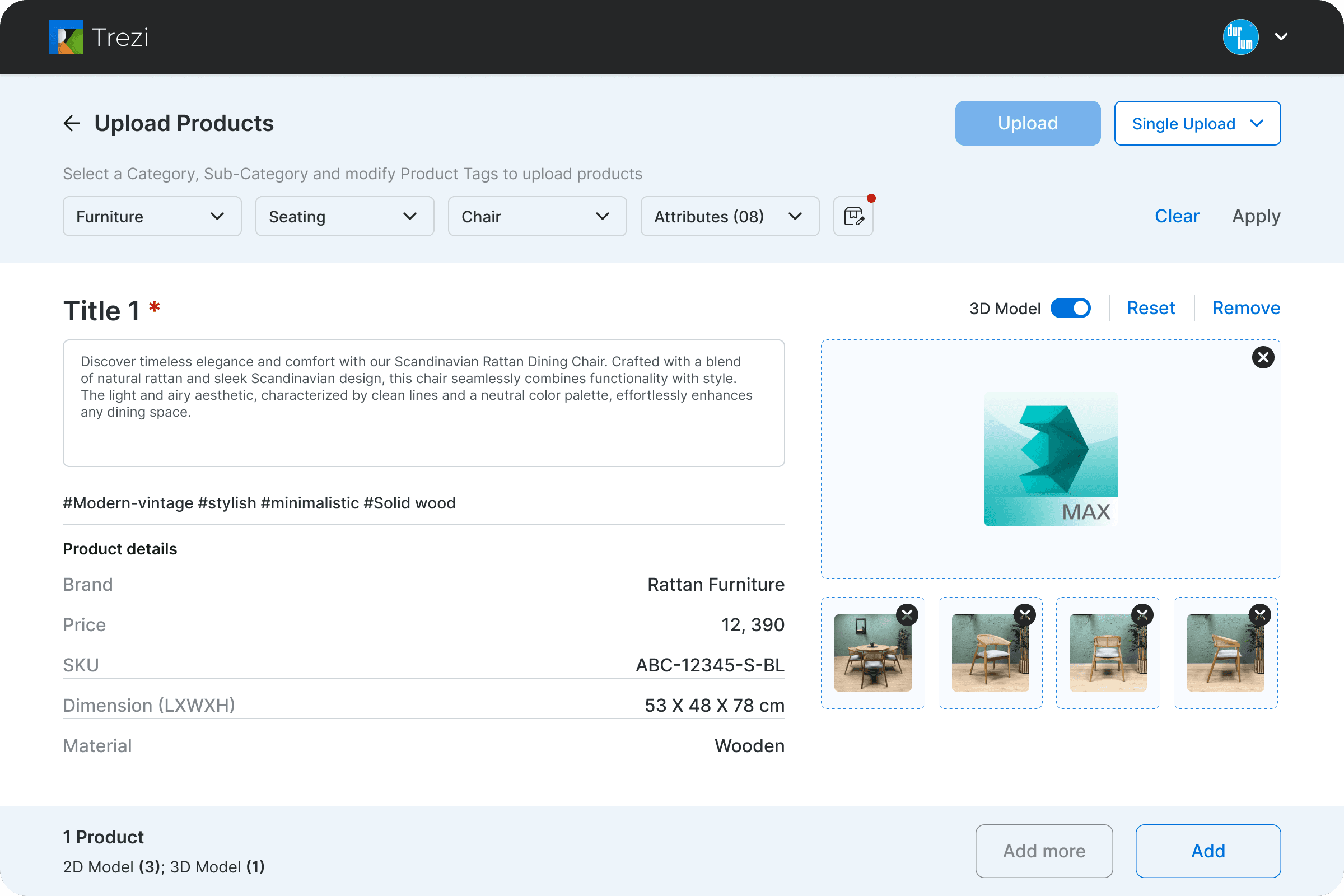
Manage Products
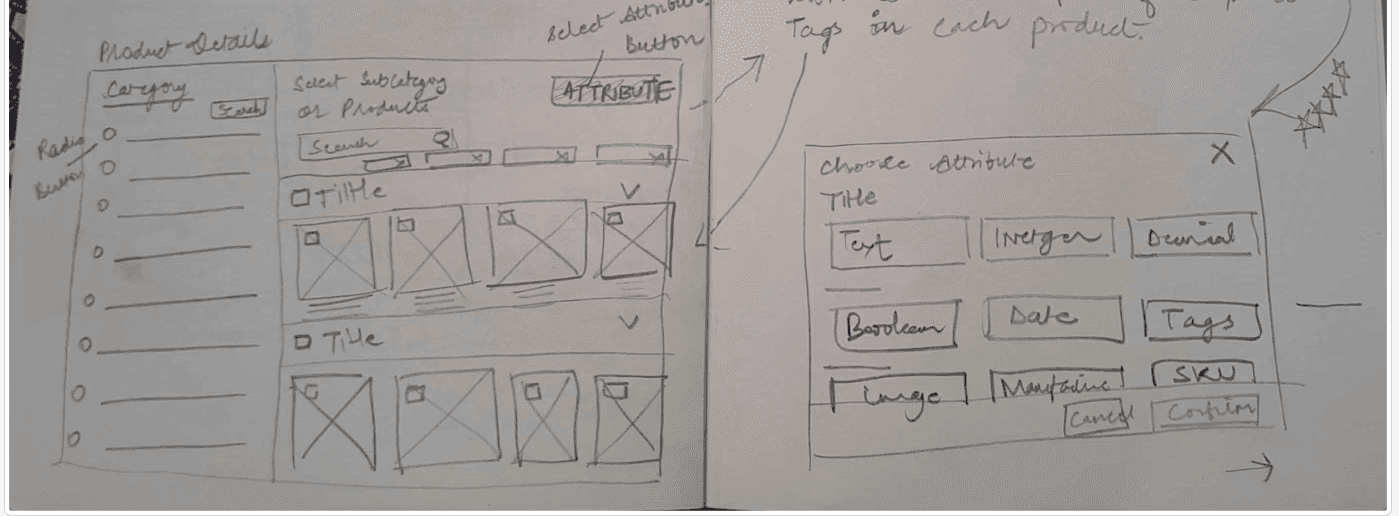
Proposed Designs

Trezi Showcase
Trezi Showcase is a browser-based B2B platform for the AEC industry that centralizes product and catalog management through a PIM system, enhanced with AI-powered visualization (Fusion AI) to help architects and designers experience products in real space and make faster decisions.
Role
UX Designer
Team
1 PM+1 Designer+Tech
Design Duration
4 Weeks
Platform
Web I SaaS I B2B

Key Takeaways
Visualization is not a feature - it’s a conversion driver in AEC industry
Structured data is the backbone of scalable digital ecosystems
Balancing advanced tech with simple UX is critical
B2B users value efficiency over aesthetics, but expect clarity
Dependency on external systems can limit control over performance
Outcome
Successfully onboarded 27 retailers in AEC industry during the first product rollout
Reduced dependency on manual catalog management and physical material samples through PIM system and AI-powered visualization
Improved buyer confidence through real-time visualization which led to higher engagement and faster decision-making for end user.
Established a foundation for a scalable B2B AEC ecosystem
Constraints
Dependency on third-party APIs like Photoroom, Reimagine AI
High infrastructure cost for real-time rendering
Data standardization challenges across different retailers
Adoption barrier for non-tech-savy retailers
Solution Strategy
Build a centralized Product Information Management (PIM) system for retailers that can manage products, catalogs, and orders. Also, provide service of Fusion AI to visualize products in users space.
Target Audience - Catalog Manager of Retailers
Key Problem
Retailers in the AEC industry struggle to organize and manage large product catalogs across platforms.
Buyers (architects/designers) find it difficult to visualize products in real spaces, delaying decisions.
Sales cycles slowed by manual coordination and physical samples, due to lack of standardized product information. And poor buyer experience due to inconsistent inventory.
Key Observation 1: Retailers often rely on Excel sheets, PDFs, or fragmented tools to manage catalogs.
Key Observation 2: Interior Designers firstly prefer to do visual decision making, especially for materials and finishes.
0-1 Early Stage (B2B)
My Contribution
Defined end-to-end product architecture for managing product and catalog. Worked on a proper framework that involves a multi-brand Design System.
Conceptualized Fusion AI experience for real-space visualization
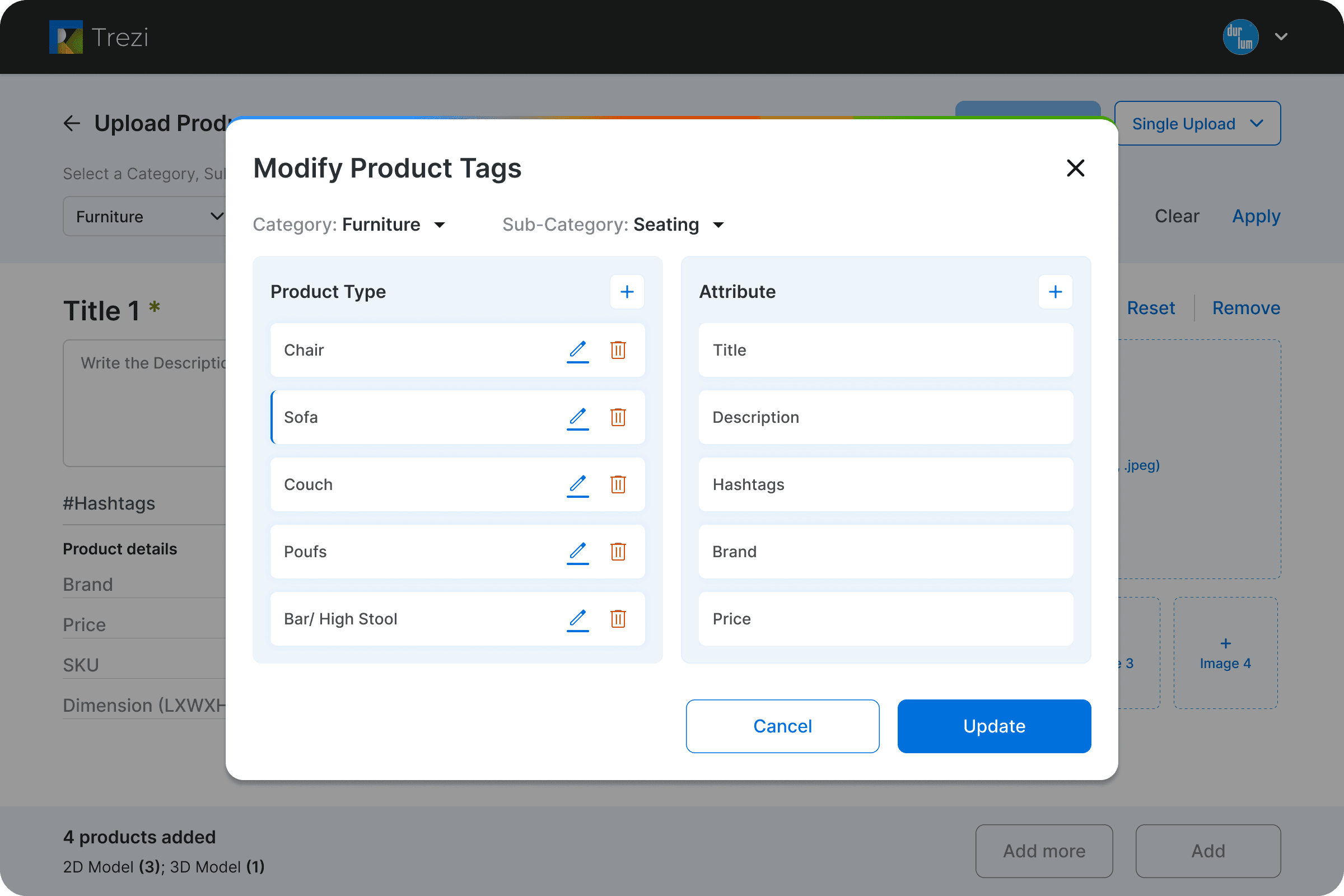
Designed structured product taxonomy and information hierarchy
Focused on scalable UX patterns for handling large datasets and ensured intuitive UI for slow learning curve adoption
Collaborated with stakeholders to iterate on solutions aligned with business goals, optimized for minimal clicks, and documented requirements for developer handoff.


Previous IA





Flipbook
1 Product per page
2 Products per page